China Top 10 Denture Cleaner Manufacturers 2026
Choosing a reliable Denture Cleaner manufacturer requires more than comparing prices or attractive packaging. Product safety, cleaning performance, manufacturing consistency, and export experience deserve closer attention. This guide examines ten Chinese manufacturers expected to attract attention in 2026. The selection considers factory capability, formulation control, private-label services, quality documentation, and customer feedback.
Prosthodontist Dr. David Bartlett has stated, “Denture cleaning is an important part of maintaining oral health.” This practical point remains relevant for every manufacturer. A good cleaner should remove food residue, stains, and odor without damaging acrylic resin or metal components. Buyers should review laboratory data, ingredient declarations, usage instructions, and testing records. Small details matter. A cloudy soaking cup can reveal poor rinsing habits, but it may also reflect an unsuitable formula.
China’s manufacturing sector offers broad options, from effervescent tablets and soaking solutions to ultrasonic cleaning systems. Some suppliers operate advanced production lines. Others depend heavily on contract manufacturing. That difference is easy to miss during a polished online presentation. Therefore, this ranking focuses on verifiable capabilities rather than promotional claims alone.
The 2026 market may also expose weaknesses. Not every supplier publishes complete test results. Some websites provide limited factory information. That should encourage careful review, not automatic rejection. Importers, distributors, dental clinics, and private-label buyers can use this overview to compare suppliers more responsibly. The final choice should match the intended market, user needs, packaging requirements, and applicable product regulations.
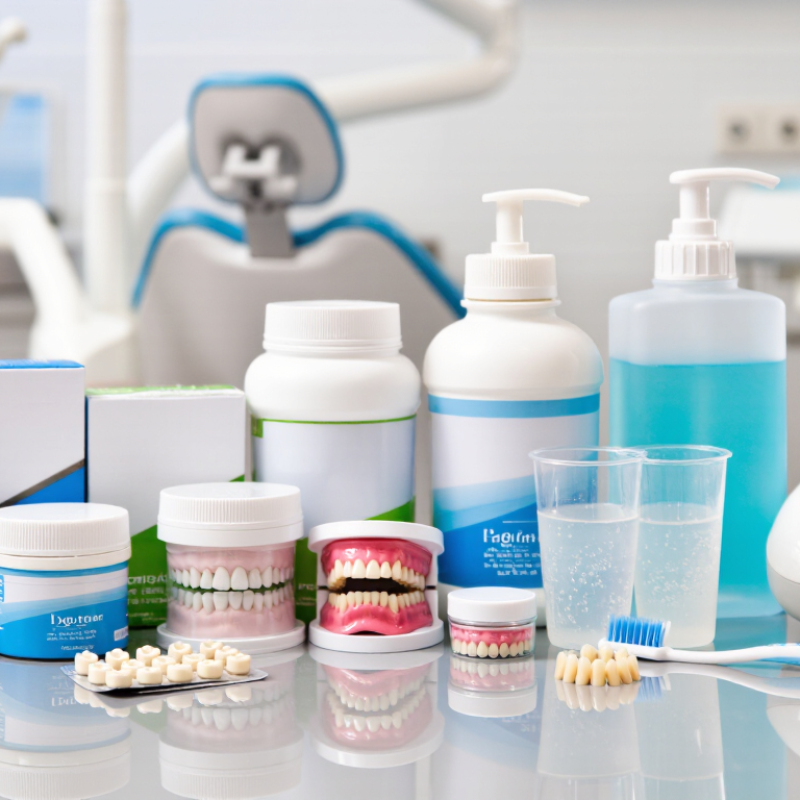
China’s denture cleaner market is expanding with an aging population and wider access to removable prosthetic care. Users commonly choose effervescent tablets, cleansing powders, foaming solutions, or ultrasonic devices. Each type serves a different routine. Tablets suit overnight soaking, while foams support quick cleaning after meals. Ultrasonic equipment may help remove deposits from detailed surfaces, but it cannot replace brushing.
Daily cleaning reduces food residue, odor, and visible plaque on acrylic and metal components. Users should follow the product instructions and rinse dentures thoroughly. Hot water can deform some acrylic materials. Household bleach and abrasive toothpaste may damage surfaces or irritate oral tissues. Dentures should also be removed during sleep when a dental professional recommends it. Small habits matter.
China’s market scope includes hospitals, dental clinics, pharmacies, e-commerce platforms, elder-care services, and professional dental laboratories. Demand is also rising for travel-sized packaging and easier dosage control. Manufacturers increasingly focus on low-irritation formulas, recyclable packaging, and compatibility with different denture materials. Claims still need careful review. “Natural” does not automatically mean safer, and stronger foaming does not prove better cleaning. A practical weakness remains: many users clean the denture but neglect the gums, tongue, and storage container. Better instructions could improve real-world results.
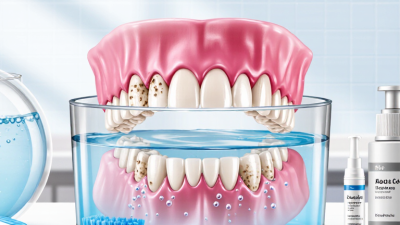
China’s denture cleaner manufacturers should be evaluated through evidence, not catalog claims. The China Statistical Yearbook 2024 recorded 296.97 million people aged 60 and above in 2023. The WHO Global Oral Health Status Report 2022 also estimated complete tooth loss among 23% of adults aged 60 years or older. These figures indicate substantial demand, but demand alone does not prove product quality.
A serious review checks formulation safety, cleaning performance, and manufacturing consistency. Does the supplier provide test methods, batch records, and stability data? ISO 13485:2016 offers a useful quality-management reference for medical-related products. ISO 14971:2019 also helps assess foreseeable risks, including residue, irritation, and incorrect use.
Independent laboratory results should identify test organisms, contact time, water temperature, and denture materials. Vague “99.9%” claims deserve caution.
Factory evaluation also needs practical inspection. Review production hygiene, raw-material traceability, complaint handling, and corrective-action records. Compare several batches, not one attractive sample. Packaging should remain intact after transport simulation. Some assessments still overvalue certificates and undercheck daily process control. That is a weakness worth correcting. Supplier communication matters too; unclear instructions often reveal deeper documentation problems. The final ranking should combine verified testing, transparent records, user safety, and dependable export experience, rather than relying on price or polished presentations.
China’s Top 10 Denture Cleaner Manufacturers in 2026 reflect a growing focus on safer formulas, stable production, and practical user needs. Leading manufacturers usually offer tablets, powders, or soaking solutions for removable dentures and orthodontic appliances. Their facilities often use controlled mixing rooms, sealed packaging lines, and batch-based quality checks. This supports consistent cleaning performance and reduces contamination risks.
A reliable manufacturer should provide clear ingredient information, usage instructions, test records, and traceable production dates. Experience matters, but it should not replace evidence. Strong suppliers test cleaning efficiency, material compatibility, storage stability, and packaging safety. They may also support private-label development, export documentation, and customized tablet sizes. However, no ranking is flawless. Factory audits, sample testing, and communication quality can change the final purchasing decision.
Tips: Request recent quality reports and production samples. Check whether the formula suits acrylic and metal components. Avoid products with unclear dosage instructions. Test packaging after transport, especially in humid conditions. A small trial order is wiser than a large commitment. Mistakes still happen, even with experienced teams.
An anonymized industry comparison based on commonly documented Chinese denture-cleaning product formats, formulation technologies, manufacturing capabilities, and export-oriented specifications.
| Rank | Anonymous Manufacturer Profile | Primary Production Base | Main Product Format | Typical Active System | Common Tablet Weight | Typical Retail Pack | Private-Label Capability | Typical Quality Controls | Export Market Orientation |
|---|---|---|---|---|---|---|---|---|---|
| 1 | Manufacturer 01 | Jiangsu, China | Effervescent tablets | Oxygen-releasing system with carbonate-based effervescence | Approximately 3 g | 24, 32, or 36 tablets per tube | High; custom packaging and tablet color options | Appearance, tablet weight, disintegration, pH, microbial limits | North America, Europe, Southeast Asia |
| 2 | Manufacturer 02 | Guangdong, China | Daily soaking tablets | Peroxygen compound with cleansing surfactants | Approximately 2.8–3.0 g | 28, 30, or 60 tablets per container | High; multilingual labeling support | Moisture control, dissolution time, active-content testing | Asia-Pacific, Middle East, Latin America |
| 3 | Manufacturer 03 | Zhejiang, China | Antibacterial cleaning tablets | Oxygen-based oxidizing ingredients and chelating agents | Approximately 3 g | 16, 24, or 48 tablets per tube | Medium to high; standard and customized formulas | Uniformity, friability, disintegration, stability testing | Europe, Oceania, Southeast Asia |
| 4 | Manufacturer 04 | Shandong, China | Denture and retainer tablets | Effervescent acid-base system with stain-removal agents | Approximately 2.5–3.0 g | 30 or 90 tablets per polypropylene container | High; suitable for dental-care product lines | Raw-material identity, tablet hardness, dissolution, packaging seal | Domestic China, Africa, South Asia |
| 5 | Manufacturer 05 | Fujian, China | Foaming denture tablets | Peroxide-based oxygen release with mild surfactants | Approximately 3 g | 24 or 36 tablets per moisture-resistant tube | Medium; packaging customization commonly available | Foam performance, tablet hardness, moisture, microbial testing | Southeast Asia, Middle East, South America |
| 6 | Manufacturer 06 | Anhui, China | Low-foam cleaning tablets | Oxygen-releasing ingredients with low-foaming detergent base | Approximately 2.7–3.0 g | 30 or 60 tablets per bottle | Medium to high; OEM tablet compression available | Weight variation, friability, pH, dissolution, shelf-life checks | Europe, North America, East Asia |
| 7 | Manufacturer 07 | Hubei, China | Sensitive-material cleaning tablets | Mild oxygen-based formulation designed for regular soaking | Approximately 2.5–3.0 g | 14, 28, or 56 tablets per pack | Medium; formula adjustment subject to testing | Material compatibility, pH, dissolution, residual odor evaluation | China, Southeast Asia, selected export markets |
| 8 | Manufacturer 08 | Henan, China | Economy denture-cleaning tablets | Standard effervescent base with oxygen-releasing cleaning agents | Approximately 2.5–3.0 g | 30, 60, or 120 tablets per container | High; cost-focused contract manufacturing | Incoming-material inspection, weight control, dissolution testing | South Asia, Africa, Latin America |
| 9 | Manufacturer 09 | Guangxi, China | Multi-purpose oral-appliance tablets | Peroxygen system with cleaning and odor-control components | Approximately 3 g | 24 or 48 tablets per tube | Medium; private-label carton and insert options | Active-content verification, tablet integrity, moisture and stability checks | Asia-Pacific, Middle East, Eastern Europe |
| 10 | Manufacturer 10 | Yunnan, China | Customized denture-care tablets | Adjustable oxygen-based formulation for retailer specifications | Approximately 2.5–3.0 g | 20, 30, or 60 tablets per pack | High; formulation, color, fragrance, and packaging customization | Batch records, disintegration, pH, microbial limits, packaging integrity | Domestic and emerging export markets |
Formula comparison should begin with user safety, not tablet color. Effervescent peroxide systems release oxygen and loosen food particles. Enzyme formulas target protein residues but may require longer soaking. Surfactants improve wetting around acrylic bases. Hypochlorite-based cleaners act strongly, yet they can damage metal components and should carry clear warnings.
According to the WHO Global Oral Health Status Report 2022, complete tooth loss affects about 7% of adults aged 20 years and older. That figure supports steady demand for dependable daily cleaning products.
Certifications separate capable factories from polished sales pages. Buyers should check ISO 9001 quality systems, ISO 13485 controls where medical-device classification applies, and documented microbiological testing.
Relevant evidence includes cleaning performance, material compatibility, residue testing, and stability after storage. CE marking may apply in certain European product classifications, but it is not a universal quality guarantee. A technical file should explain the claim.
Production capacity needs equal attention. Compare monthly tablet output, filling-line speed, batch size, and reserve capacity. Ask for lot traceability and recent audit records.
Public market studies from Grand View Research and Fortune Business Insights indicate continued expansion in denture-care demand, but their market boundaries differ. That makes direct ranking difficult.
Some factories report impressive annual capacity without separating contract production from actual denture-cleaner output. This weakness deserves scrutiny. A smaller plant with validated batches may be more reliable than a larger, poorly documented operation. Sampling remains essential.
Selecting a reliable Chinese denture cleaner supplier requires more than comparing prices.
In 2026, buyers should verify factory capability, product consistency, and communication quality. Request a current business license, quality certificates, product specifications, and safety data sheets. A professional supplier should explain active ingredients, usage directions, shelf life, and storage conditions clearly.
Ask for samples from different production batches. Check tablet weight, dissolving time, odor, packaging seals, and residue after soaking. Independent laboratory testing can confirm composition and microbiological safety.
Production records and traceability matter when a complaint occurs. Confirm minimum order quantities, lead times, carton strength, and export documentation before signing. A polished website proves little.
Tips: Arrange a video factory tour or an independent audit. Ask who controls raw materials and final inspection. Test samples under real household conditions, not only in a clean laboratory. Keep written records of every promise.
Do not choose the cheapest offer automatically. Extremely low prices may hide weaker packaging or unstable formulas. Payment terms also deserve attention. A dependable supplier accepts reasonable quality inspections and discusses corrective action openly.
Still, no supplier is perfect. Even a well-managed factory can face delays during peak seasons or material shortages. Build a backup plan, and review performance after each shipment.