Choosing the right Denture Box in 2026 involves more than comparing colors, prices, or printed logos. Global buyers now examine protection, hygiene, material safety, shipping efficiency, and user convenience. A box may look attractive on a product page, yet fail when exposed to humidity, repeated opening, or rough transit handling. Small details matter. Hinges, ventilation, inner supports, and closure strength can affect daily use.
This guide explores the leading denture box types for distributors, dental laboratories, clinics, and retail brands. Options may include lightweight plastic cases, ventilated storage boxes, premium aluminum designs, eco-conscious fiber packages, and customized promotional models. Each type serves a different purchasing goal. For example, a compact polypropylene case may suit large-volume orders, while a reinforced box may better protect premium dentures during international delivery. Buyers should request samples, inspect edges, test closures, and verify material documentation before approving production.
Reliable sourcing also requires practical questions. Can the supplier maintain consistent dimensions across batches? Does the packaging protect dentures without creating pressure points? Are labels, inks, and adhesives suitable for the intended market? These questions support responsible procurement and reflect real experience in dental supply chains. Still, no design is perfect. A ventilated case may improve moisture control but reduce dust protection. A luxury finish may increase perceived value but raise shipping costs. This article compares these trade-offs, helping global buyers select a Denture Box that balances quality, safety, branding, and commercial reality. Needs vary. Careful testing remains essential.
Denture boxes are basic oral-care tools, not decorative packaging. They protect removable dentures from dust, impact, and accidental loss. The WHO Global Oral Health Status Report 2022 estimates that complete tooth loss affects about 7% of adults aged 20 and older worldwide. Among adults aged 60 and above, the figure rises to about 23%. These numbers show why safe storage matters across different markets.
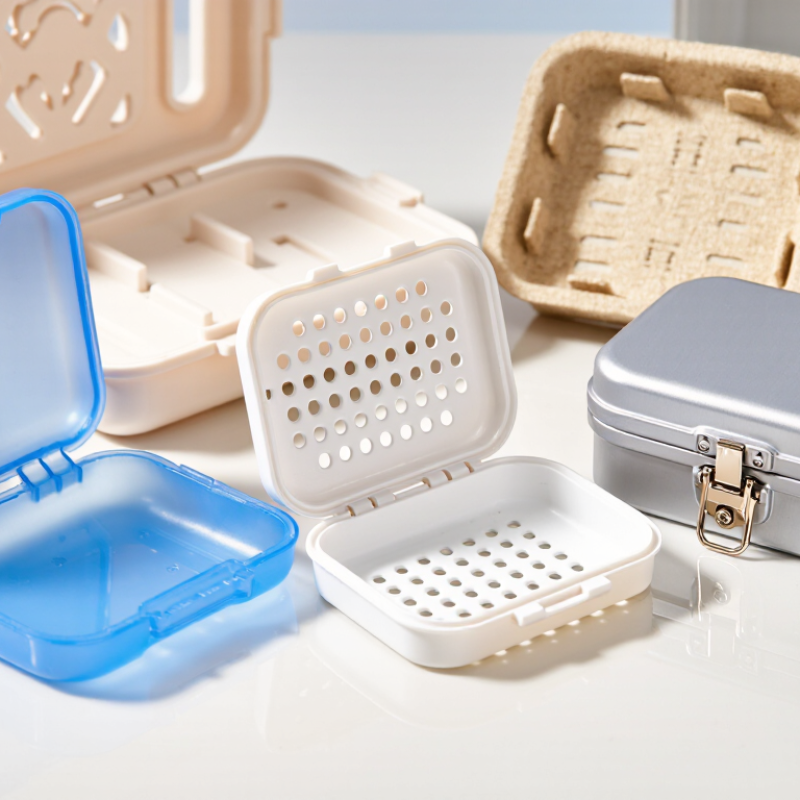
Common box types include ventilated hard cases, soaking containers, travel cases, and dual-compartment designs. A ventilated case helps reduce trapped moisture after cleaning. A soaking container needs a stable base, leak-resistant lid, and enough depth for full immersion. Travel cases should fit inside a small bag without pressing the denture. Dual-compartment boxes separate upper and lower dentures, which can reduce scratching and confusion.
The American College of Prosthodontists advises regular denture cleaning and removing dentures during sleep. Buyers should therefore check whether the box supports cleaning routines, rather than choosing by appearance alone. Smooth interiors are easier to rinse. Rounded edges also help prevent small cracks during handling. Tiny details matter.
A useful box is not always the most expensive. Some low-cost designs have weak hinges or poor airflow. This is where buyers must stay critical. Product testing, material declarations, and clear care instructions provide stronger evidence than attractive photographs. Even so, no box solves every hygiene problem. Users still need clean hands, regular brushing, and professional dental checks.
Denture Box Basics and Their Role in Oral Care
The chart compares four common denture box formats by the number of practical functions they can provide: secure closure, ventilation, soaking support, portability, and separation of upper and lower dentures. A higher score indicates broader everyday functionality, not market share or brand performance. Dentures should be cleaned according to professional guidance and stored safely when not in use.
For global buyers in 2026, the main denture box types include rigid ventilated cases, compact travel boxes, and foldable polypropylene cases.
Rigid cases offer stronger impact protection and suit clinics or long-distance shipping. Ventilated designs reduce trapped moisture after cleaning. Travel boxes use lighter plastic and fit easily inside handbags or luggage. Foldable cases save warehouse space, but their hinges may wear sooner.
Material choice should match local climate and user habits. WHO’s Global Oral Health Status Report 2022 states that nearly 3.5 billion people live with oral diseases. This highlights the need for hygienic, practical storage. Buyers should check smooth interiors, drainage openings, secure closures, and enough space for dentures without pressure points. Food-grade plastic can support safer daily handling, but suppliers should verify test documents. “Antibacterial” claims need evidence, not attractive wording. That detail is often missed.
Tips: Request samples before bulk purchasing. Test the box after repeated opening, washing, and drying. Compare recycled content with odor and durability. In humid regions, airflow matters more than appearance. In colder markets, brittle plastic can become a problem. I would not select a box from photos alone. A small weakness in the hinge can create large replacement costs. Global buyers should also confirm carton dimensions, labeling needs, and transport performance before final approval.
Materials, Designs, and Features Compared by Use Case
For daily home storage, polypropylene boxes offer a practical balance of weight, durability, and cost. Their smooth surfaces are easier to rinse, while rounded corners reduce residue buildup. A secure snap lid matters when the box sits in a bathroom drawer. Still, weak hinges can fail after repeated opening. Buyers should request hinge-cycle testing and material documentation before placing large orders.
For clinics and care facilities, stackable ABS boxes provide stronger walls and clearer size consistency. A removable inner tray can separate dentures from cleaning accessories. This design saves staff time. Transparent lids also make identification easier, but they may show scratches quickly. Labels should remain readable after exposure to water and common cleaning solutions. Suppliers should provide samples, dimensions, and test reports rather than relying on product photos.
For travel and shipping, compact cases with leak-resistant seals are more suitable. Soft silicone inserts can reduce movement, especially inside a crowded suitcase. However, airtight storage is not always appropriate for every denture material or cleaning routine. Users should follow professional care instructions. Ventilation, drainage, and moisture control require careful evaluation. Some buyers overvalue appearance and underestimate cleaning access. That is a costly oversight. A useful design has few narrow gaps, a stable base, and a lid that opens without excessive force. A small flaw remains possible. It is better to test real handling conditions before approving a global purchase.
What Are the Top Denture Box Types for Global Buyers in 2026?
Reusable polypropylene boxes remain practical for daily denture storage. They are light, impact-resistant, and easy to wipe clean. Ventilation holes can reduce trapped moisture, but poor airflow may still encourage microbial growth. The World Health Organization reports that nearly 3.5 billion people live with oral diseases worldwide. That scale makes simple hygiene design commercially important. Buyers should choose smooth interiors, rounded corners, and removable drainage inserts. Small details matter.
For travel, leak-resistant cases offer stronger protection against dust and accidental spills. However, airtight storage is not automatically safer. Dentures need suitable cleaning and drying practices before enclosure. The CDC recommends regular cleaning of removable dental appliances and careful hand hygiene. Packaging cannot replace those habits. Some designs also use recycled plastic or molded paper fiber. The United Nations Environment Programme estimates that global plastic production could nearly triple by 2060 without stronger intervention. Sustainability claims therefore need material declarations, recycled-content evidence, and credible end-of-life instructions.
Regulatory review should match the product’s intended use and destination market. If a box supports sterile medical-device packaging, ISO 11607 requirements may become relevant. That standard focuses on materials, seal integrity, and maintaining sterility. Ordinary denture containers may follow different consumer-product rules. Buyers should request safety data, material composition, migration testing where applicable, and cleaning validation. One overlooked issue is labeling language. A durable box with unclear instructions can still create hygiene risks. Compliance is not always visible.
| Denture Box Type | Typical Material | Safety Profile | Hygiene Performance | Durability | Sustainability Profile | Key Regulatory Considerations | Best Fit for Global Buyers |
|---|---|---|---|---|---|---|---|
| Hinged polypropylene box | PP, resin identification code 5 | High | High when smooth and easy to rinse | High | Reusable; recyclable where PP collection exists | For food-contact or oral-care use, verify applicable food-contact rules, migration testing, colorant compliance, and good manufacturing practice. Avoid unsupported “medical device” claims. | Strong all-round option for retail, dental-care kits, travel use, and repeated opening and closing. |
| Snap-lid high-density polyethylene box | HDPE, resin identification code 2 | High | High if the interior has no deep seams | High; good impact resistance | Reusable; widely recyclable in established systems | Confirm permitted additives, pigment safety, heavy-metal restrictions, and market-specific product-contact requirements. Test closure retention during transport. | Suitable for logistics, clinics, institutional purchasing, and buyers prioritizing impact resistance. |
| Clear PET/PETG-style display box | Transparent polyester plastic; classification and additives vary by formulation | High when compliant | High visibility; smooth surfaces support inspection | Medium to high | Recyclability depends on exact resin, local sorting, and whether components are separable | Do not assume all clear polyester products share the same recycling route. Obtain resin identification, additive, migration, and recycling declarations for the exact formulation. | Best for merchandising, visual inspection, premium presentation, and products requiring contents visibility. |
| Ventilated polypropylene box | PP body with controlled ventilation openings | High with protected vents | May reduce trapped moisture; does not replace cleaning | High | Reusable and potentially recyclable as PP | Vent size and placement should prevent accidental loss or contamination. Product instructions should state cleaning, drying, and storage limitations. | Useful in humid climates or for users who need airflow, provided the design prevents dust and splash entry. |
| Reusable stainless-steel container | Stainless steel, commonly austenitic grades for consumer products | High when corrosion-resistant and finished smoothly | High; non-porous surface supports cleaning | Very high | Long service life; highly recyclable as metal | Verify alloy declaration, corrosion resistance, edge safety, lid fit, and any coating compliance. Avoid claims of sterilization unless validated for the complete product. | Appropriate for premium, long-life, low-plastic, and frequent-use applications where added weight is acceptable. |
| Single-use lightweight PP box | Thin-wall PP, resin identification code 5 | High when clean and compliant | Adequate for short-term protected storage | Low to medium | Uses less material; recycling depends on local infrastructure | Packaging and waste-labeling obligations vary by destination. Clearly state whether the item is intended for single use and do not market it as a reusable sterilization container without validation. | Suitable for travel kits, emergency distribution, sampling, and cost-sensitive programs with controlled replacement cycles. |
Global buyers should select a denture box supplier by product performance, not attractive photographs. The World Health Organization’s Global Oral Health Status Report (2022) estimates complete tooth loss affects 7% of adults aged 20 or older and 23% of people aged 60 or older. This highlights the need for practical, hygienic storage products across different markets.
Ask suppliers for material specifications, safety documentation, and batch traceability. The box should resist crushing, staining, odors, and repeated cleaning. A secure hinge matters. So does ventilation. Request samples in several denture sizes, then test them in real conditions: a bathroom shelf, a travel bag, and a warm warehouse.
Review drop-test results, closure cycles, and dimensional tolerances. Supplier quality systems, such as ISO 9001 certification, can support consistency, but certification alone does not prove product quality.
Check minimum order quantities, production capacity, inspection procedures, and export documentation before signing. Packaging data should match the actual shipment. Small mismatches create expensive delays. A polished sample can mislead. Some suppliers modify materials after approval to reduce costs, so written specifications and pre-shipment inspections are essential. Environmental claims also require evidence, including recycled content records and disposal guidance. Buyers should compare total landed cost, not only the factory price. A cheaper box may crack during transport or fail after repeated washing. That lesson is easy to overlook.