Inquiry
Form loading...

Top Dental Floss Keychain Types for Global Buyers

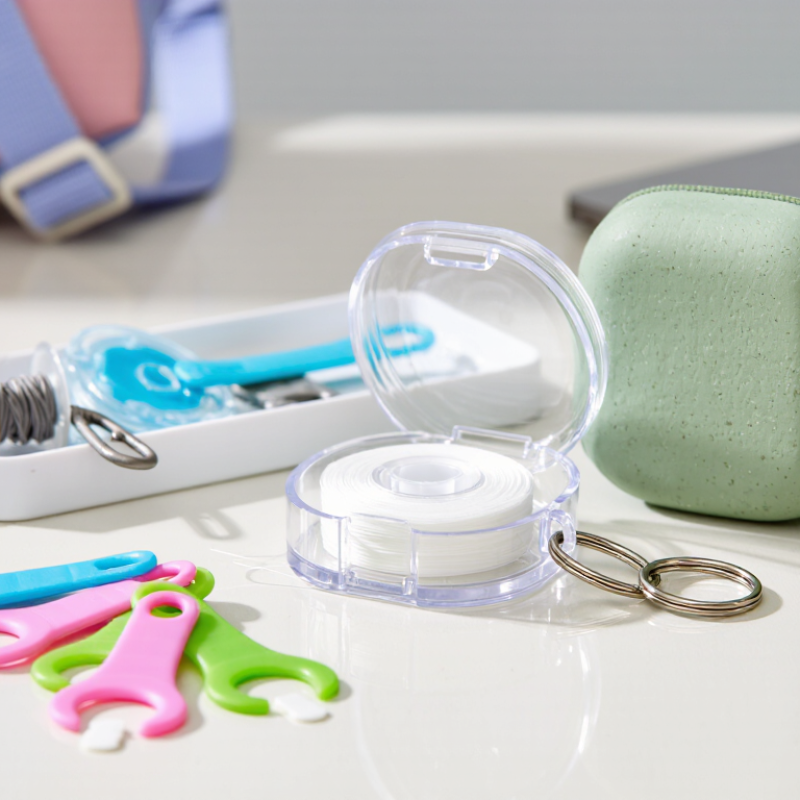
For global buyers, a Dental Floss Keychain is more than a compact promotional item. It combines daily oral-care access with portable branding. A user may carry it on a backpack, attach it to travel luggage, or keep it beside a work desk. This practical format creates value when the design remains clean, durable, and easy to refill.

This introduction explores popular Dental Floss Keychain types for different purchasing needs. Options may include disposable floss picks, refillable containers, biodegradable cases, and custom-logo models. Each type presents different choices in floss material, case construction, packaging, and production volume. Buyers should examine hinge strength, thread quality, cutting-edge safety, and grip comfort. Small details matter.

Supplier experience also deserves careful review. Reliable manufacturers should provide clear specifications, sample approval, consistent inspection, and traceable packaging information. Buyers should confirm that materials meet the requirements of their target markets. Product claims should be supported by testing or supplier documentation. Marketing language must stay accurate.

Not every attractive design performs well. Some low-cost cases feel weak after repeated opening. Some branded prints fade sooner than expected. That is worth checking. A sensible evaluation compares unit price, minimum order quantity, shipping protection, and expected product life. Regional preferences also influence selection. Some buyers prioritize sustainability, while others value vivid colors and low cost.

This guide offers a practical starting point, not a universal ranking. Market conditions change. Buyer feedback should shape the final decision. The best Dental Floss Keychain balances usability, compliance, presentation, and dependable supply.

Top Dental Floss Keychain Types for Global Buyers

Dental Floss Keychain Basics and Core Design Features

Top Dental Floss Keychain Types for Global Buyers

Dental Floss Keychain Basics and Core Design Features

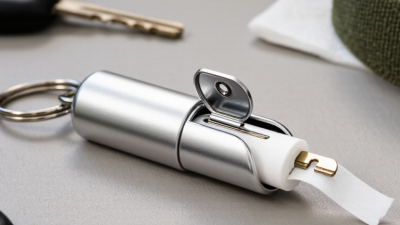
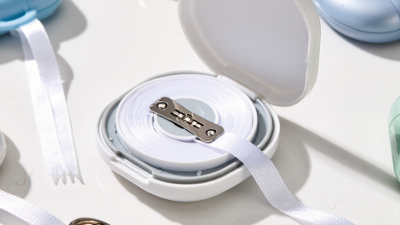
A dental floss keychain combines a small floss spool, cutting edge, protective case, and keyring. It keeps oral care available during travel, work, or meals away from home. Most useful designs fit comfortably between two fingers and open without excessive force. Small details matter. A reliable model should dispense floss smoothly, without sudden breaks or loose strands.

Material selection affects safety and daily satisfaction. Buyers should check for food-contact-safe plastics, corrosion-resistant metal, and a clean, burr-free cutter. The cutter must hold tension firmly but avoid sharp exposed edges. A covered opening helps protect unused floss from dust and pocket debris. For humid markets, a snug closure and moisture-resistant construction deserve careful attention.

Portability must not reduce usability. The keyring should resist twisting, while the case should remain stable during flossing. A refillable spool can reduce waste and support longer-term use, but replacement loading should be simple. Complicated refills discourage regular maintenance. I have found that extremely small cases often look attractive but feel awkward in larger hands. This is worth testing with real users. A clear product specification should state floss length, case dimensions, material details, and cutter design. Packaging should also protect the dispenser from crushing during international shipping.

Main Types of Dental Floss Keychains by Structure and Use

Top Dental Floss Keychain Types for Global Buyers

Main Types of Dental Floss Keychains by Structure and Use

A dental floss keychain combines portable care with a small everyday accessory. Its structure usually determines refill speed, grip, cleaning, and durability. The spool dispenser is the simplest type. A protected roll sits inside a hinged or sliding shell. It suits commuters, travelers, and buyers seeking economical accessories. The snap-case version opens quickly but may expose the floss to dust if its closure loosens. Small details matter.

Refillable keychains reduce plastic waste and support repeat purchasing. They need a stable core, smooth cutting edge, and clear refill dimensions. Without those details, users may struggle with tangled floss or a loose spool. Floss-pick keychains combine a handle and tensioned thread in one compact body. They are useful after meals, especially for users who dislike winding floss around their fingers. However, the fixed pick shape can limit access around crowded teeth. That limitation deserves honest product testing.

For children, rounded edges and a larger grip may improve handling. For hotels, offices, and travel kits, sealed single-use units offer cleaner distribution. Reusable models fit sustainability programs, but buyers should verify material safety and cleaning guidance. Food-contact suitability, tensile strength, cutter performance, packaging integrity, and target-market requirements deserve checking before bulk orders. A basic sample test can reveal more than attractive catalog images. I once treated compact size as the main advantage; it was not. A tiny case can become frustrating when the cutter slips or the lid resists opening.

Top Dental Floss Keychain Types for Global Buyers

Main types of dental floss keychains by structure and use

The chart compares common dental floss keychain structures by their typical floss capacity. Individual floss-pick keychains are designed for immediate use, while refillable cases and mini-spool dispensers provide more floss for repeated travel or everyday carrying. Capacities shown are representative specifications commonly used for these product formats rather than company or brand sales data.

Material, Size, and Refill Options for International Buyers

Top Dental Floss Keychain Types for Global Buyers

For international buyers, material affects comfort, durability, and shipping performance. Nylon floss is flexible and widely used for daily cleaning. PTFE floss slides smoothly between tight teeth. Plant-based fibers may support sustainability goals, but their strength can vary. Always request fiber specifications, coating details, and test samples before placing a large order. The dispenser body often uses ABS, PP, aluminum, or stainless steel. ABS is light and economical. Metal feels stronger, yet it can increase weight and freight costs.

Size matters when the keychain will travel in pockets, bags, or sample kits. A compact case around 45 to 60 millimeters is convenient for everyday carrying. However, very small cases may hold less floss and feel difficult to refill. Check the actual floss length, cutter position, clasp strength, and opening method. A smooth cutter should separate floss cleanly without sharp edges. Measurements can differ slightly between production batches. That detail deserves attention.

Refill design can determine the product’s long-term value. Some cases accept sealed floss cartridges, while others use small refill spools. Cartridge systems are cleaner and faster for retail use. Spools may reduce packaging waste, but loading them takes more care. Buyers should confirm refill dimensions, core diameter, floss thickness, and winding direction. Request assembly instructions and several refill samples. Not every “universal” refill fits well. That wording can mislead. In my experience, testing the keychain after repeated opening, closing, and carrying reveals weaknesses that photos cannot show. A practical purchase needs both attractive packaging and dependable daily handling.

Safety, Hygiene, and Compliance Factors Across Global Markets

Top Dental Floss Keychain Types for Global Buyers

Safety, Hygiene, and Compliance Factors Across Global Markets

Dental floss keychains combine oral-care utility with everyday portability, but their small size demands careful product evaluation. Buyers should inspect rounded edges, secure lids, and cutters that cannot detach during normal use. A loose cutter can create an injury risk. Small parts may also require child-safety warnings, depending on the destination market and product design.

Hygiene starts with individually sealed floss, clean assembly areas, and moisture-resistant packaging. Materials should be suitable for repeated handling and clearly identified through supplier declarations or independent test reports. Check waxes, coatings, dyes, and metal components for restricted substances under applicable chemical rules. Lot codes and production records make recalls more manageable. Practical details matter: a keychain stored beside keys may collect dust, moisture, and skin oils.

Global compliance is not one universal checklist. Importers should review labeling language, age guidance, recycling marks, packaging rules, and customs documentation for each sales region. Some markets may expect local conformity records, while others focus on general consumer safety obligations. Never treat a supplier certificate as complete proof without checking its scope and test date. I have seen attractive samples fail because the hinge pin loosened after repeated opening. Appearance is not evidence. Buyers should also question whether cleaning instructions are realistic, especially when the floss dispenser cannot be opened without touching the inner spool.

Top Dental Floss Keychain Types for Global Buyers - Safety, Hygiene, and Compliance Factors Across Global Markets

Product Type Typical Structure Main Hygiene Risk Key Safety Controls Material and Chemical Considerations Global Compliance Considerations Buyer Verification Points Recommended Use Position
Refillable floss spool keychain Compact case containing a replaceable spool of continuous floss, usually with a cutting edge or cutter. The spool and cutter may be touched repeatedly; moisture and debris can enter if the case is not sealed. Use a secure lid, protected cutter, rounded external edges, and a design that prevents accidental opening on a keyring. Check floss coating, colorants, adhesives, and plastic composition. Request restricted-substance declarations for the case and accessories. For the EU, general consumer-product safety requirements and REACH obligations may apply. In the United States, classification can depend on product claims and intended use. Other markets may require local labeling and chemical-safety documentation. Inspect cutter retention, case closure, floss tensile performance, migration or chemical test reports where relevant, and packaging instructions. Suitable for regular personal carry when the case is kept dry and the floss is replaced at appropriate intervals.
Single-use floss-pick keychain Small keychain container holding individually formed floss picks, generally with a short handle and tensioned floss. Unwrapped picks can become contaminated through contact with the case, keys, hands, or other objects. Use individual wrapping or a clean internal dispenser, eliminate sharp flash, and ensure the floss does not detach during normal use. Verify the handle resin, floss polymer, inks, and packaging are suitable for intended oral contact and do not contain prohibited substances above applicable limits. Packaging, labeling, traceability, and general product-safety rules vary by destination. Avoid medical or therapeutic claims unless the product has been assessed under the relevant health-product framework. Check seal integrity, lot coding, pick breakage resistance, sharp-edge inspection, and instructions stating that picks should not be shared or reused. Good for travel, hospitality, promotional distribution, and situations where a clean individual unit is preferred.
Reusable flosser-pick keychain A durable handle with a fixed or replaceable floss section, carried in a compact protective holder. Reuse without effective cleaning can transfer plaque, food residue, and microorganisms. Provide clear cleaning and replacement instructions, smooth non-porous surfaces, and a holder that allows drying rather than trapping moisture. Select materials that tolerate the stated cleaning method. Avoid coatings that crack, peel, or retain moisture after repeated use. If marketed with cleaning, disease-prevention, or therapeutic claims, additional regulatory review may be required in some jurisdictions. Consumer-product labeling and chemical rules still apply. Request repeated-use testing, cleaning-cycle evaluation, handle fatigue testing, and evidence that the floss attachment remains secure. Appropriate only when the user follows cleaning, drying, and replacement instructions.
Retractable cartridge keychain Enclosed cartridge with a pull-out length of floss and an internal retraction or storage mechanism. Internal mechanism may collect moisture or residue and may be difficult to inspect or clean. Prevent uncontrolled retraction, floss snapping, finger pinching, and accidental exposure of cutting components. Evaluate spring or elastomer components, lubricants, adhesives, and plastic parts for durability and possible contact with the floss. Mechanical safety, small-part hazards, packaging information, and general product-safety requirements should be assessed for each destination market. Test pull force, cycle life, retraction behavior, water or humidity exposure, and the security of the keychain attachment. Best for buyers prioritizing compactness, provided the cartridge can be replaced and the mechanism remains clean.
Orthodontic threader keychain Compact holder containing floss threaders or stiffened floss sections designed to pass beneath wires or around dental appliances. The threader may contact brackets and appliance surfaces, while repeated handling can contaminate loose units. Use flexible, smooth threader ends; avoid burrs and sharp edges; provide instructions to stop use if the device damages tissue or appliances. Confirm that stiffening materials, coatings, dyes, and adhesives are stable during normal oral use and do not shed fibers. Claims directed at orthodontic care or clinical outcomes may affect regulatory assessment. Destination-specific labeling and intended-use review are essential. Check threader flexibility, end finish, pull strength, fiber shedding, packaging cleanliness, and compatibility warnings. Useful for users with braces or bridges, subject to advice from a dental professional when appliances are present.
Biobased or compostable-material keychain Keychain case or handle made partly from bio-based polymer, paper-based material, or another alternative material. Some alternative materials absorb moisture, deform, or become difficult to sanitize if the design is not adequately protected. Validate dimensional stability, surface smoothness, moisture resistance, and the absence of splintering or material flaking. “Bio-based” does not automatically mean biodegradable or compostable. Environmental claims should be supported by recognized testing and clearly defined disposal conditions. Environmental-claim rules differ across markets. EU, UK, North American, and Asia-Pacific buyers may require substantiation, recycling information, or precise claim wording. Request material composition, moisture testing, compostability or biodegradation evidence where claimed, and disposal instructions relevant to the destination. Suitable for sustainability-focused programs only when the environmental claim and end-of-life route are clearly documented.
Child-oriented floss keychain Small, colorful keychain format intended for supervised use by children or families. Small detachable parts, sharp cutters, long floss strands, and unsupervised reuse can create safety concerns. Use age-appropriate design, secure components, rounded edges, tamper-resistant packaging, and prominent supervision warnings where necessary. Control heavy metals, restricted substances, surface coatings, and detachable components in accordance with the destination market’s rules. Products marketed to children may face additional toy, child-product, labeling, and small-part requirements. Intended age and marketing presentation should be reviewed before sale. Conduct small-part, pull, torque, sharp-edge, and bite-related assessments where applicable; verify age grading and warning language. Use only with adult guidance unless the product has been specifically assessed for the intended age group.
Promotional or event-distribution keychain Low-cost compact holder or individually packed floss product distributed at events, hotels, clinics, or retail campaigns. Long storage periods, uncontrolled handling, and inadequate packaging can affect cleanliness and product integrity. Use sealed primary packaging, clear lot identification, storage guidance, and a design that prevents contact with the floss before opening. Check ink, adhesive, plastic, and packaging odor or transfer. Confirm that decorative finishes do not compromise the hygienic barrier. Importers remain responsible for destination-market labeling, traceability, product safety, and advertising claims. Avoid unsupported claims such as “sterile,” “antibacterial,” or “medical grade.” Verify shelf-life or storage rationale, packaging seal tests, batch records, artwork compliance, and documented complaint or recall procedures. Suitable for mass distribution when hygiene, traceability, and disposal instructions are controlled across the supply chain.
Buyer note: Regulatory classification depends on the product’s construction, intended use, claims, packaging, and destination country. Before commercial shipment, confirm applicable consumer-product, medical-product, chemical, packaging, environmental, labeling, and import requirements with a qualified local compliance specialist.

How to Compare Suppliers, Customization, and Purchase Value

Top Dental Floss Keychain Types for Global Buyers

Dental floss keychains usually come as refillable capsules, compact floss-pick cases, or sealed single-use dispensers. Nylon floss suits routine cleaning, while PTFE tape slides more easily between tight contacts. The choice should match user comfort, not only unit price.

The World Health Organization’s Global Oral Health Status Report 2022 estimates that 2.5 billion people have untreated caries in permanent teeth. That scale supports practical, portable oral-care products. Still, a keychain cannot replace evidence-based dental guidance.

Supplier comparison needs measurable details. Request samples with the same floss length, handle material, closure design, and packaging. Check tensile strength, sharp edges, odor, leakage, and refill compatibility. Ask for batch records and material declarations. ISO 9001 certification may show process control, but it does not prove every floss product is safe or effective.

The U.S. Centers for Disease Control and Prevention states that flossing helps remove plaque between teeth and under the gumline. The difficult part is consistent daily use.

Customization can include logo printing, color matching, carton design, and custom molds. Small orders often carry higher tooling and sampling costs. Larger orders may reduce unit pricing, but excess inventory can erase that advantage. Compare landed cost, including freight, inspection, packaging, and rejected units.

A simple pilot order is wiser than a large commitment. I would not trust a beautiful sample alone. Performance can change between batches. Suppliers should also disclose floss length, coating ingredients, production location, and recommended shelf life.